


Blog
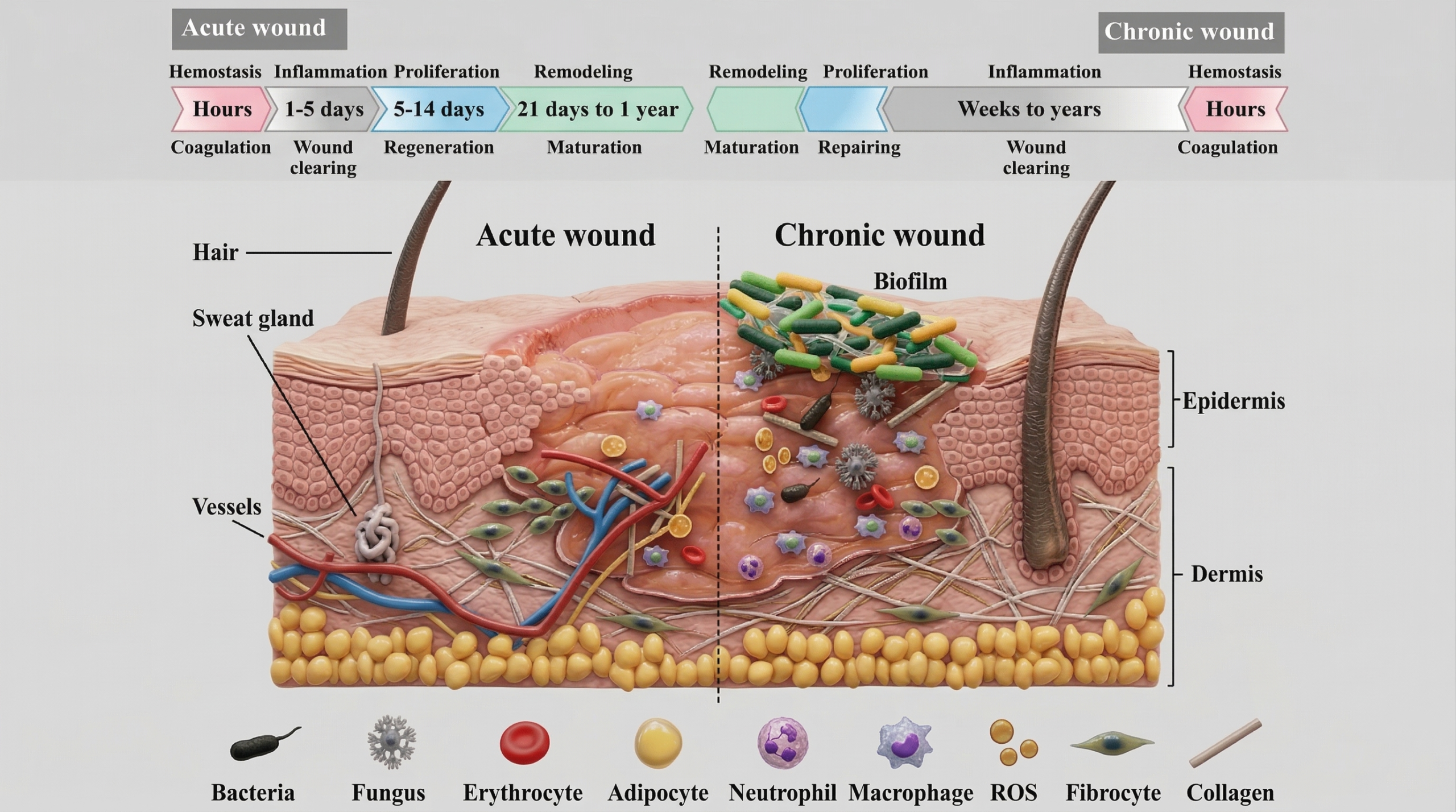
Wounds are a common part of life, ranging from minor cuts to complex injuries that require long-term care. Understanding the types of wounds especially the distinction between acute and chronic wounds is essential for proper management, faster healing, and prevention of complications.
What is a Wound?
A wound is any disruption in the normal structure and function of the skin or underlying tissues. It can result from physical injury, surgery, or underlying medical conditions. Wounds are broadly classified into two categories: acute wounds and chronic wounds.
Many people think the difference between acute and chronic wounds is just how long they last—and that’s partly true. However, other important factors affect healing and care decisions. While there is no formal definition, medical professionals generally agree on how these wounds are identified. Since every skin injury is different, identifying the type of cutaneous wound is an important first step toward proper treatment. Wounds are a common part of life arising from injuries, surgeries, or medical conditions, and because each type differs in structure, biology, and pathophysiology, their healing processes and treatments vary widely. This blog emphasizes the significance of wound types and how biological differences form the basis of their classification.
Wounds on the skin are generally categorized as acute or chronic, based on their causes and the way they impact healing. Acute wounds result from sudden injuries or medical procedures and usually heal quickly through coordinated molecular processes, although recovery depends on the wound’s size, depth, and severity. Chronic wounds heal differently from acute wounds, as they fail to progress through the normal stages of healing within the expected timeframe—often remaining stuck in prolonged inflammation marked by ongoing tissue damage, infection, and necrosis.
Acute Wounds
Acute wounds are injuries that occur suddenly and follow a predictable healing process. These wounds typically heal within a short period (usually within a few days to weeks) if properly managed.
Common Types of Acute Wounds
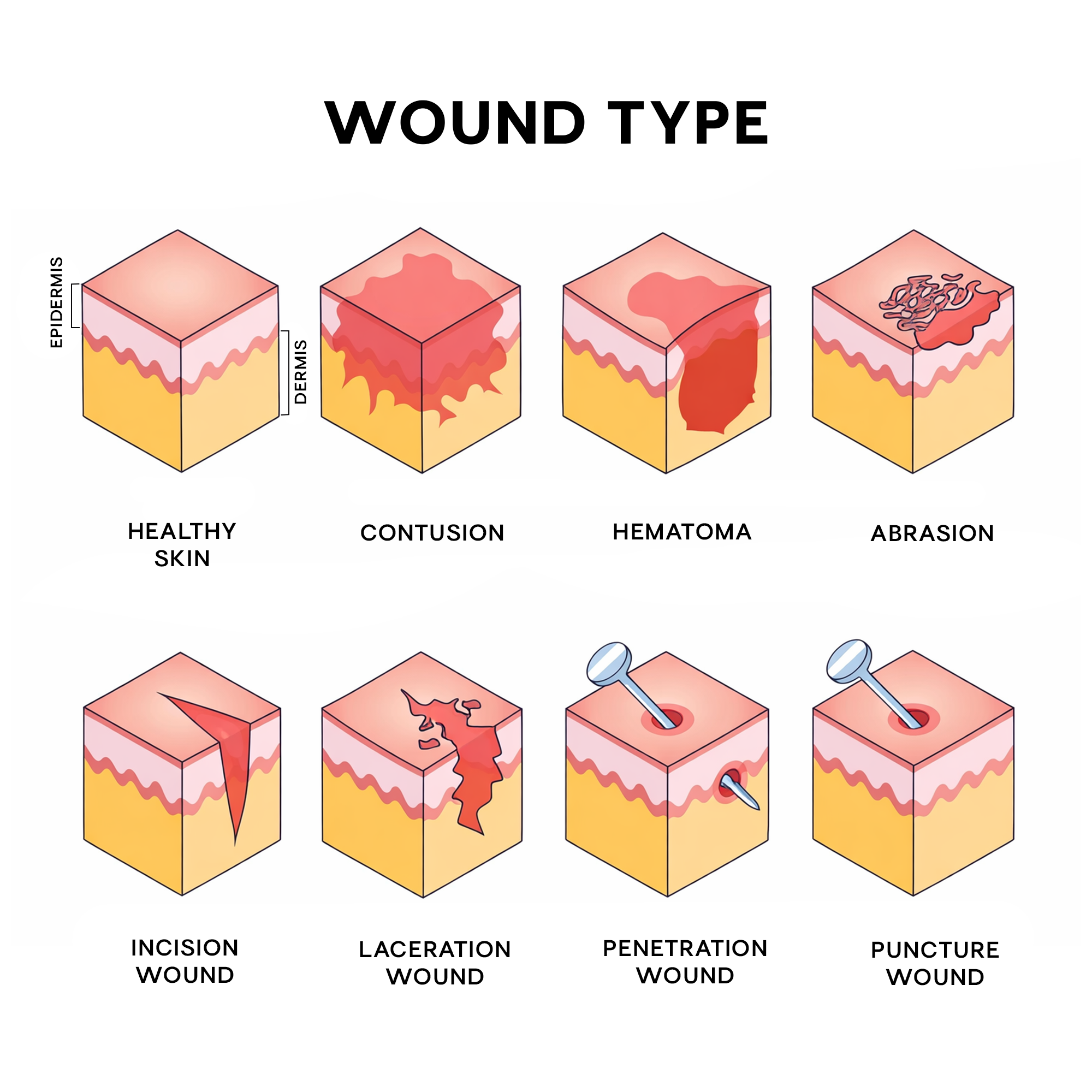
- Abrasions
o Caused by friction against a rough surface
o Usually superficial, affecting only the outer skin layer - Lacerations
o Irregular tears in the skin caused by sharp or blunt trauma
o May involve deeper tissues - Incisions
o Clean, straight cuts often caused by surgical instruments
o Heal faster due to well-defined edges - Puncture Wounds
o Caused by sharp, pointed objects like nails or needles
o High risk of infection due to depth - Burns
o Result from heat, chemicals, electricity, or radiation
o Classified into first, second, and third-degree burns
Healing Characteristics of Acute Wounds
- Progress through normal stages: hemostasis, inflammation, proliferation, and remodeling
- Minimal complications when properly treated
- Respond well to standard wound care
Most acute wounds heal within about two weeks, but the exact healing time depends on factors such as how serious the injury is, its size, the patient’s age, underlying health conditions, and the care received after the injury.
Acute wounds are commonly classified by the type of environmental factors involved in the injury. Burns, surgical wounds, and traumatic injuries carry the highest risk of infection.
Chronic Wounds
Chronic wounds are those that fail to progress through the normal healing stages in an orderly and timely manner. These wounds often persist for weeks, months, or even years.
Common Types of Chronic Wounds
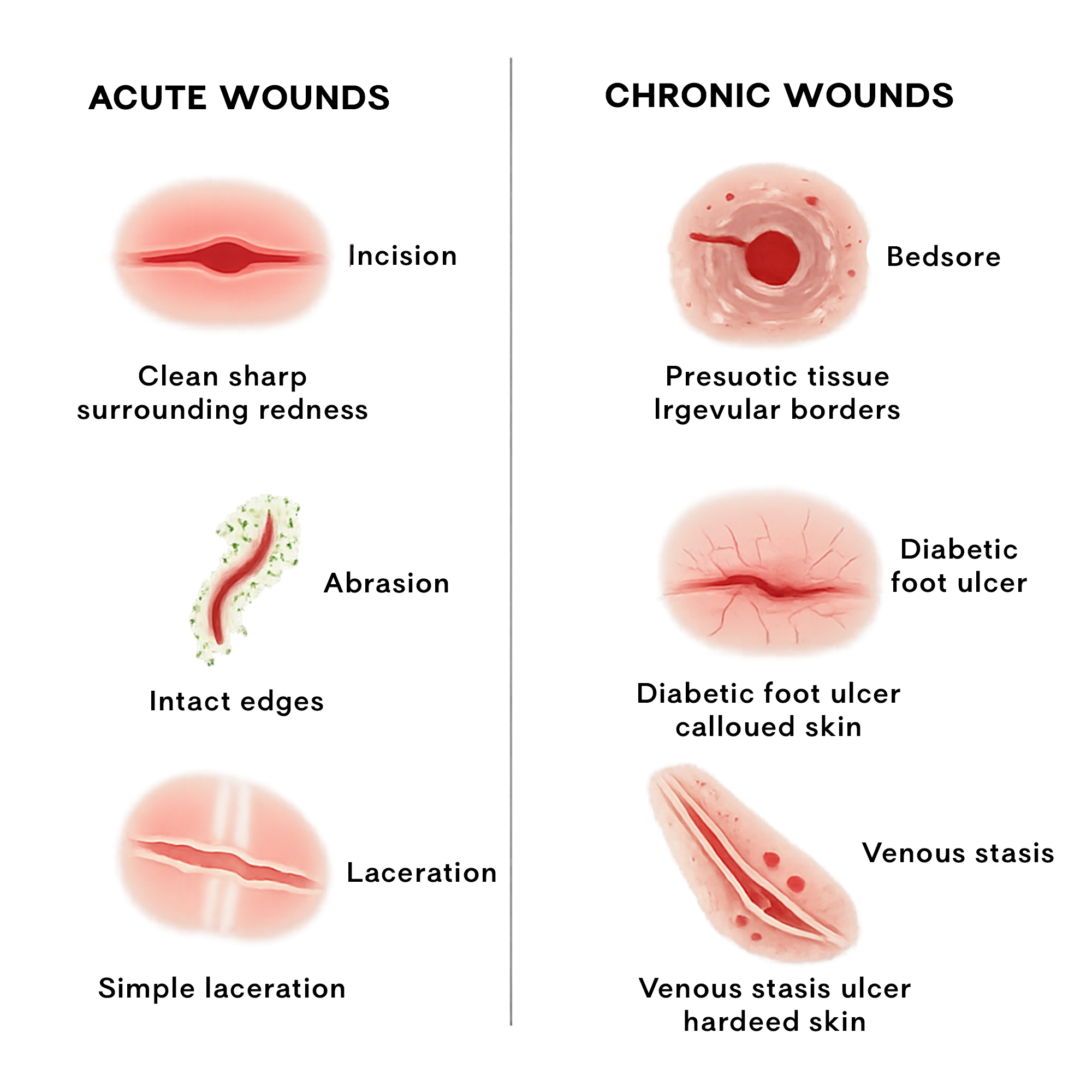
- Diabetic Ulcers
- Occur in individuals with diabetes, commonly on the feet
- Caused by poor circulation and nerve damage
- Pressure Ulcers (Bedsores)
- Develop due to prolonged pressure on the skin
- Common in immobile or bedridden patients
- Venous Ulcers
- Occur due to poor blood circulation in the veins
- Typically found on the lower legs
- Arterial Ulcers
- Result from inadequate blood supply (ischemia)
- Often painful and located on extremities
Characteristics of Chronic Wounds
- Delayed or stalled healing process
- Persistent inflammation
- High risk of infection
- Often associated with underlying conditions like diabetes, vascular disease, or immobility
Chronic wounds are injuries that do not heal in a normal or timely manner. They are common, often poorly treated, and can lead to serious complications and higher healthcare costs. Common lower-limb wounds include arterial, diabetic, pressure, and venous ulcers, and many can be identified through physical examination alone.
Chronic wound infections are typically prolonged and hidden, driven primarily by biofilm formation. Unlike acute infections caused by planktonic bacteria that are usually cleared by the immune system and antibiotics, biofilm-associated infections are highly resistant and difficult to heal. Biofilm acts as a foreign body on the wound surface, triggering continuous neutrophil recruitment. Unable to eliminate the biofilm, neutrophils release enzymes and reactive oxygen species that damage surrounding tissue.
Key Differences Between Acute and Chronic Wounds
|
Feature |
Acute Wounds |
Chronic Wounds |
|---|---|---|
|
Healing Time |
Short (days to weeks) |
Long (weeks to months or more) |
|
Healing Process |
Predictable and orderly |
Delayed or disrupted |
|
Cause |
Injury or surgery |
Underlying health conditions |
|
Infection Risk |
Lower (if treated properly) |
Higher |
|
Examples |
Cuts, burns, surgical wounds |
Diabetic ulcers, pressure sores |
Factors Affecting Wound Healing
Several factors can influence how a wound heals:
- Age
- Nutrition
- Blood circulation
- Infection
- Chronic diseases (e.g., diabetes)
- Medications
Importance of Proper Wound Care
Proper wound management is crucial to prevent complications such as infection, delayed healing, and tissue damage. This includes:
- Cleaning and dressing the wound
- Monitoring for signs of infection
- Managing underlying health conditions
Seeking medical attention when necessary
Conclusion
Understanding the differences between acute and chronic wounds helps in choosing the right treatment approach. While acute wounds generally heal quickly with proper care, chronic wounds require more comprehensive management and medical attention. Early intervention and appropriate care can significantly improve healing outcomes and patient quality of life.
References:
- Classification of Wounds: Know before Research and Clinical Practice; Irfan-Maqsood, January, 2018.Journal of Genes and Cells, 4(2018): p, 1-4 imaqpress.com doi: 10.15562/gnc.61
- Acute vs. Chronic Wounds – Heart & Health Medical
- Immunology of Acute and Chronic Wound Healing Kamila Raziyeva 1, Yevgeniy Kim 1, Zharylkasyn Zharkinbekov 1, Kuat Kassymbek 1, Shiro Jimi 2, Arman Saparov 1, *Biomolecules. 2021 May 8;11(5):700. doi: 10.3390/biom11050700
- Selection of Appropriate Wound Dressing for Various Wounds Shi C, Wang C, Liu H, Li Q, Li R, Zhang Y, Liu Y, Shao Y and Wang J (2020) Selection of Appropriate Wound Dressing for Various Wounds. Front. Bioeng. Biotechnol. 8:182.19 March 2020doi: 10.3389/fbioe.2020.00182
- The Difference Between Acute and Chronic Wounds | Wound Source
- Challenges and innovations in treating chronic and acute wound infections: from basic science to clinical practice; XiaotongDing1, †, QinghanTang1, †,Zeyu Xu1,†,YeXu2, HaoZhang2, Dong feng Zheng2, Shuqin Wang2, QianTan2, JoannekeMaitz3,4 , PeterK.Maitz3,4, ShaopingYin1,*, Yiwei Wang 1,3,* and JunChen1,* Burns & Trauma, 2022, 10, tkac014 https://doi.org/10.1093/burnst/tkac014
- Acute and chronic wound infections: microbiological, immunological, clinical and therapeutic distinctions. Journal of wound care vol 31, no 5, may 2022
- Chronic Wounds: Evaluation and Management Steven Bowers, DO, and Eginia Franco, MD, St. Luke’s University Health Network, Bethlehem, Pennsylvania American Family Physician Volume 101, Number 3 February 1, 2020 aafp.org/afp